關關雎鳩,在河之洲。 窈窕淑女,君子好逑。 參差荇菜,左右流之。 窈窕淑女,寤寐求之。 求之不得,寤寐思服。 悠哉悠哉,輾轉反側。 參差荇菜,左右采之。 窈窕淑女,琴瑟友之。 參差荇菜,左右芼之。 窈窕淑女,鐘鼓樂之。
Shijing (Classic of Poetry), Mao no. 1
Text: Shijing (Classic of Poetry), Mao no. 1. Received text in ten couplets.
Guanju · course handout
Elemental Who is in it, where, and what happens? Intermediate Four stanzas, one plant, three verbs. What does the repetition do? Advanced How does a love song become a lesson in statecraft?
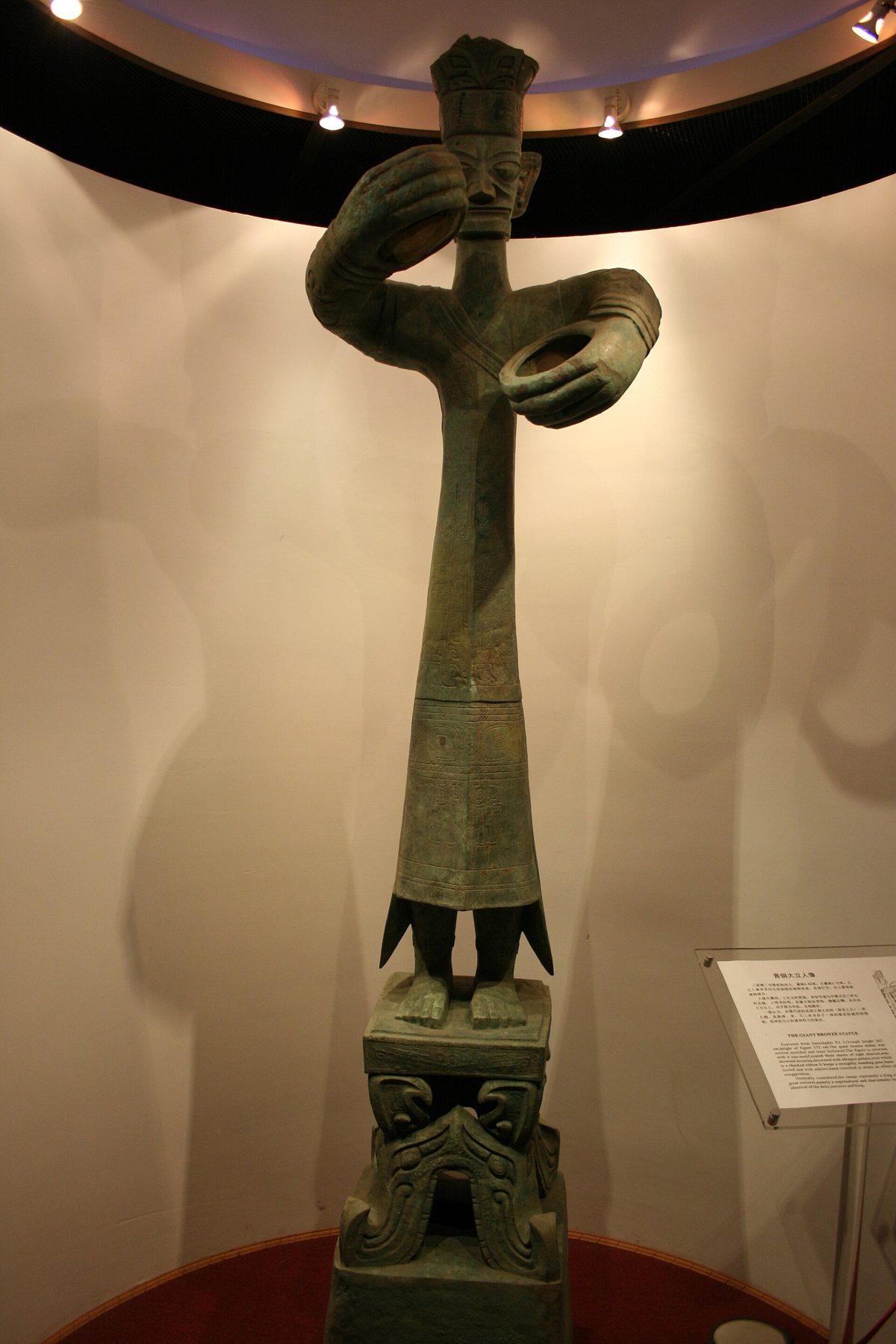
Sanxingdui, Guanghan, Sichuan
Bronze, c. 1200 BCE. Figure 1.8 m; total height 2.62 m with base; c. 180 kg. Excavated 1986, Sanxingdui sacrificial pit 2. Sanxingdui Museum.
Large Standing Figure · art-and-archaeology image source · CC0
Elemental Describe it without naming it. Hands, eyes, feet, scale. Intermediate Compare those hands to a Shang ritual vessel. What is each object for? Advanced Shang left records; Sanxingdui did not. What does that do to the history?
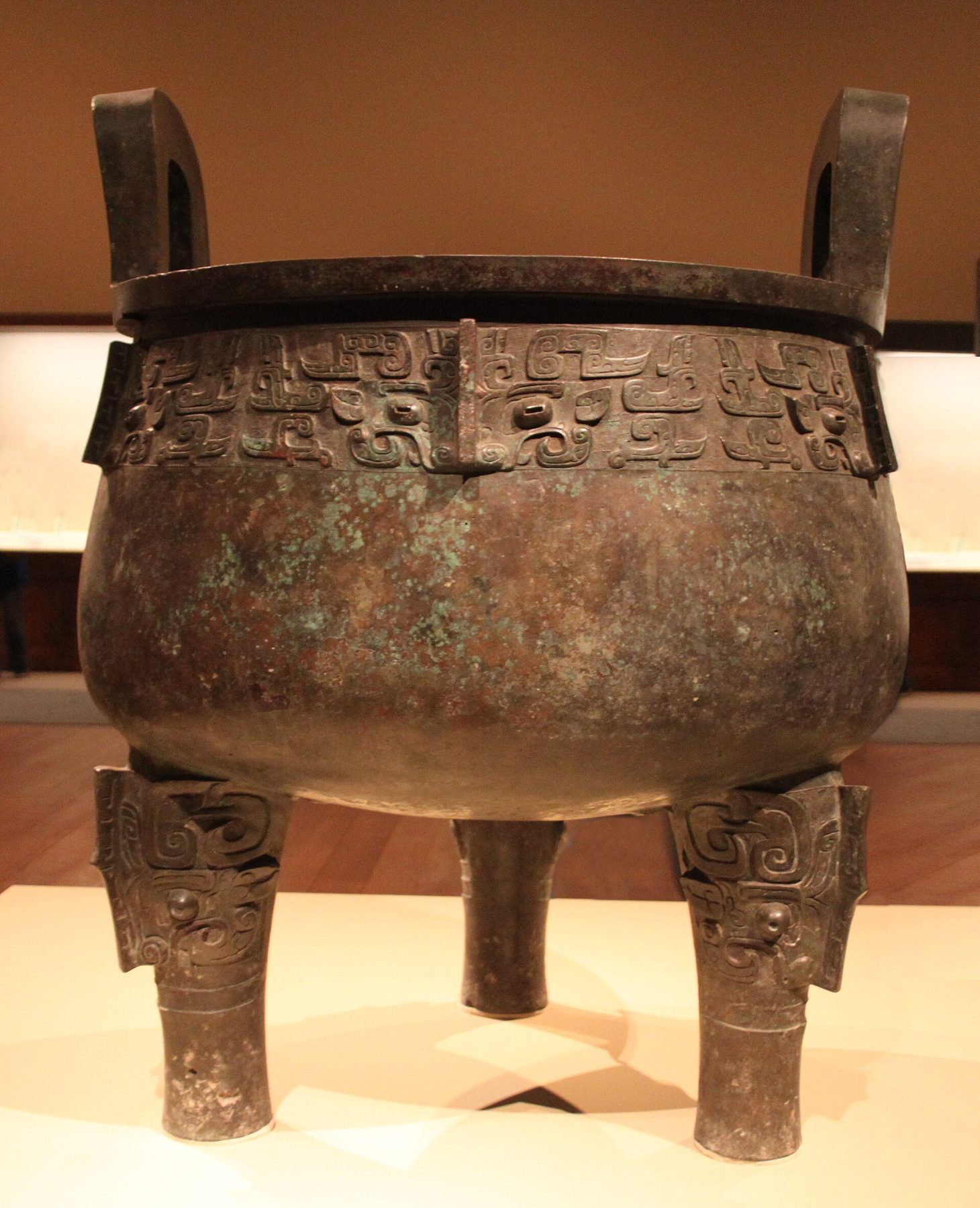
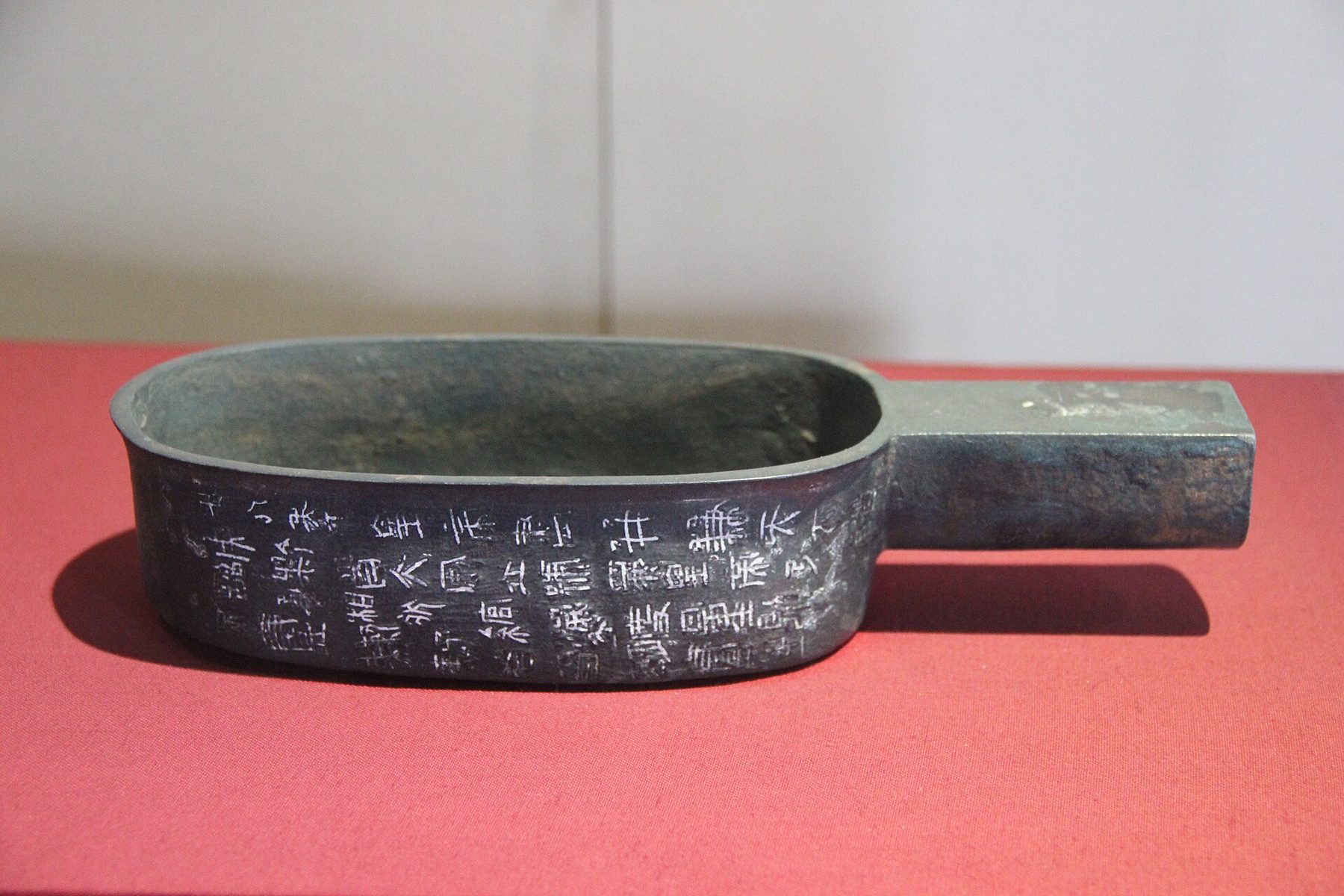
Western Zhou ritual cauldron
Bronze, reign of King Kang, c. 11th century BCE. Inscription of 291 characters. Excavated Qishan, Shaanxi, 19th century. National Museum of China, Beijing.
Da Yu ding · Wikipedia image source · CC BY-SA 4.0
Elemental Where is the writing, and who could ever see it? Intermediate It cooks offerings for the dead. How does that change the claim? Advanced Who is a Mandate claim addressed to?
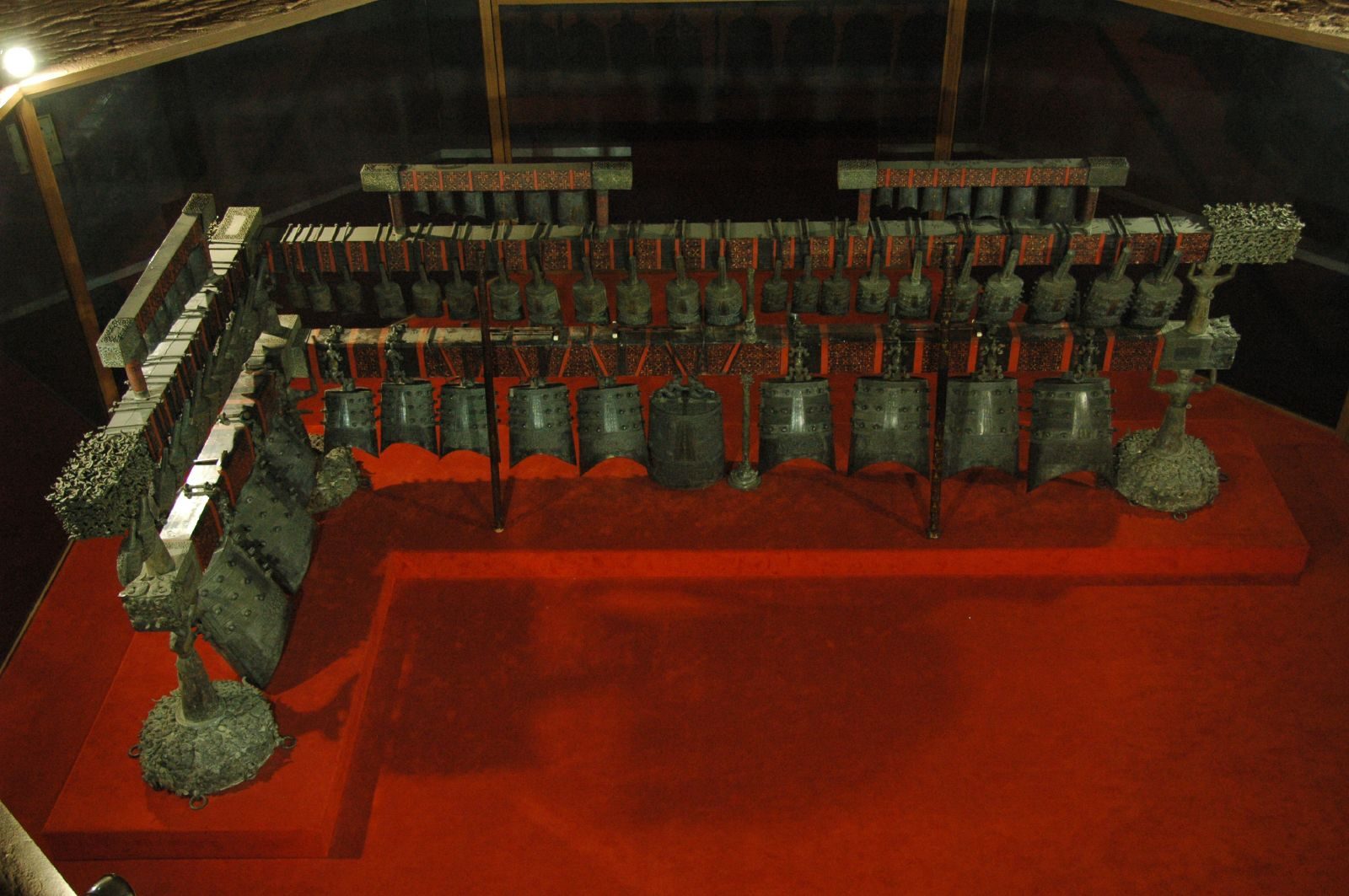
Sixty-five bronze bells from one tomb
Bronze, buried 433 BCE. Excavated 1978, Leigudun, Suizhou, Hubei. Hubei Provincial Museum.
Bianzhong of Marquis Yi · Wikipedia image source · CC BY-SA 2.0
Elemental Count what you see. What did it cost to make? Intermediate Each bell sounds two pitches. What knowledge is behind that? Advanced Does the object prove Mozi right or prove him a philistine?
Week 3 September 29–October 1
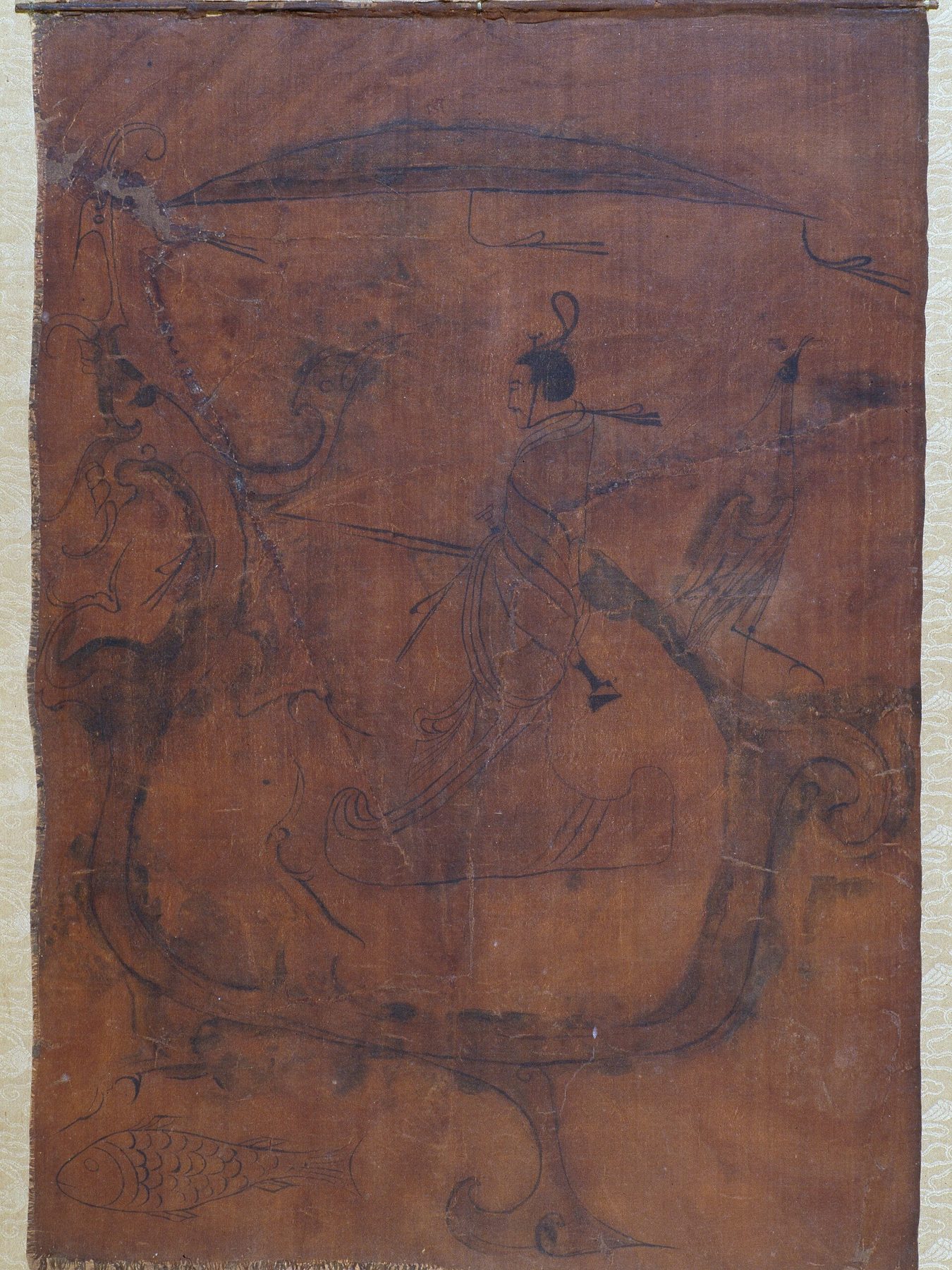
Painted silk banner from a Chu tomb
Ink and colour on silk, Warring States period, 475–221 BCE. 37.5 × 28 cm. Excavated 1973, Zidanku tomb 1, Changsha. Hunan Museum.
Man riding a dragon · Wikipedia image source · Public domain
Elemental What is the man doing, and where is he going? Intermediate It was folded into a coffin. What is a painting for if its viewer is dead? Advanced Riding the six vapours: metaphor, claim, or instructions?
The standard volume of the state of Qin
Bronze, 344 BCE (18th year of Duke Xiao of Qin), inscribed with Shang Yang's name. Length 18.7 cm, capacity 202.15 cm³. Re-inscribed under the First Emperor. Shanghai Museum.
The measuring vessel · China Daily image source · CC0
Elemental What is it, and what would you do with it? Intermediate Why put the maker's name and the exact volume on the object? Advanced Is a standard measure fairness, extraction, or both?
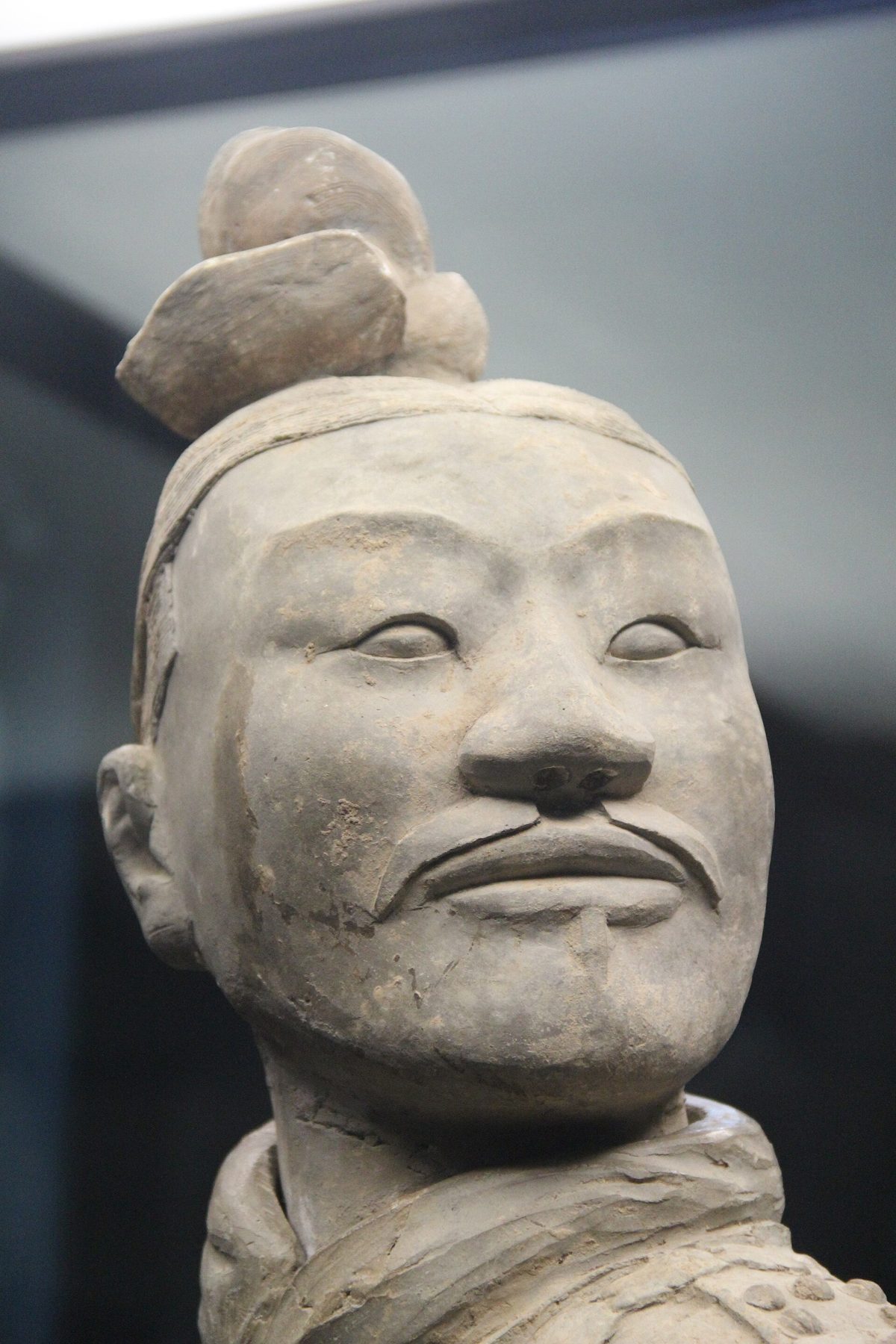
Tomb complex of the First Emperor
Earthenware, c. 210 BCE. Excavated from 1974, Lintong, Shaanxi. Museum of the Terracotta Army.
Terracotta Army · Smarthistory image source · CC0
Elemental Look only at the face. What makes him a particular man? Intermediate Moulded bodies, hand-finished heads. Why spend effort there? Advanced Is naming the maker good government or fear?
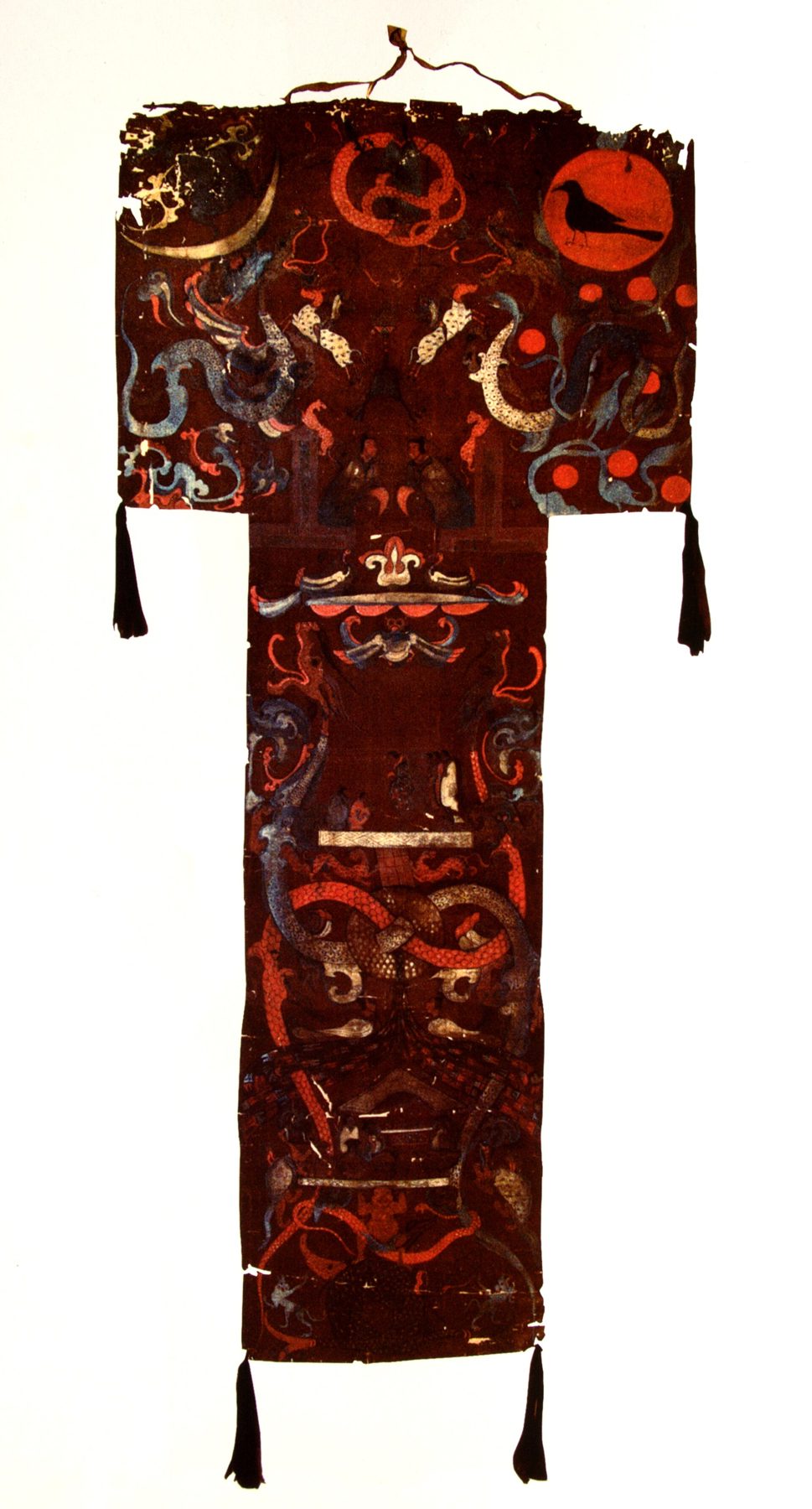
T-shaped painted silk, Mawangdui tomb 1
Ink and colour on silk, 2nd century BCE. 205 × 92 × 47.7 cm. Excavated 1972, Mawangdui tomb 1, Changsha. Hunan Museum.
Funeral banner of Lady Dai · Smarthistory image source · Public domain
Elemental Divide it into zones. What is in each? Intermediate Find Lady Dai. How is she marked out? Advanced Does this illustrate correlative cosmology or do something else?
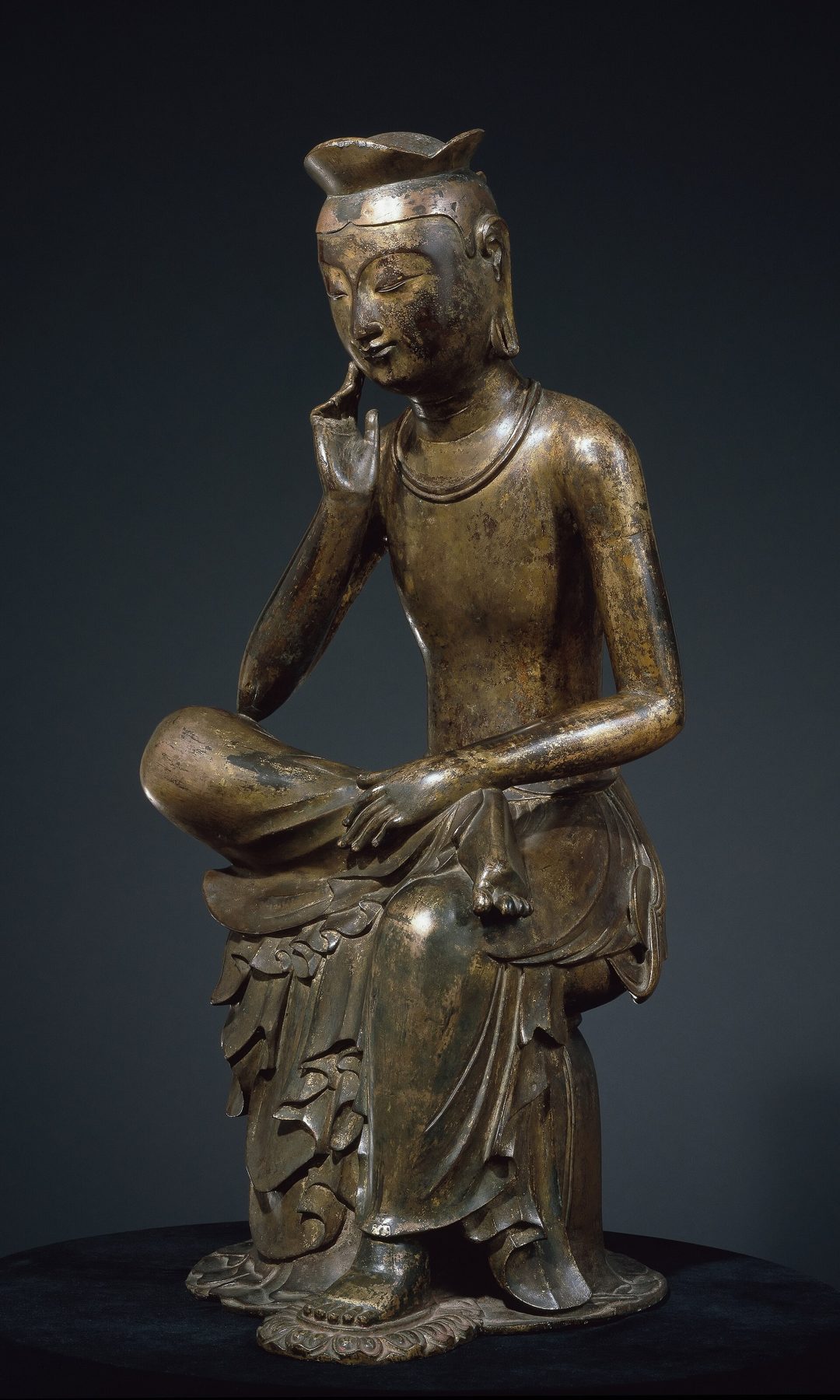
Korean National Treasure no. 83
Gilt bronze, Three Kingdoms period, late 6th–early 7th century. Height 93.5 cm. National Museum of Korea, Seoul.
National Treasure 83 · Wikipedia image source · KOGL Type 1
Elemental Describe the pose. Weight, hand, eyes. Intermediate What is smooth and what is elaborate? Where did the effort go? Advanced What has to change for a state to adopt a foreign religion?
Thursday, October 15 Sui, Tang, and Eurasia
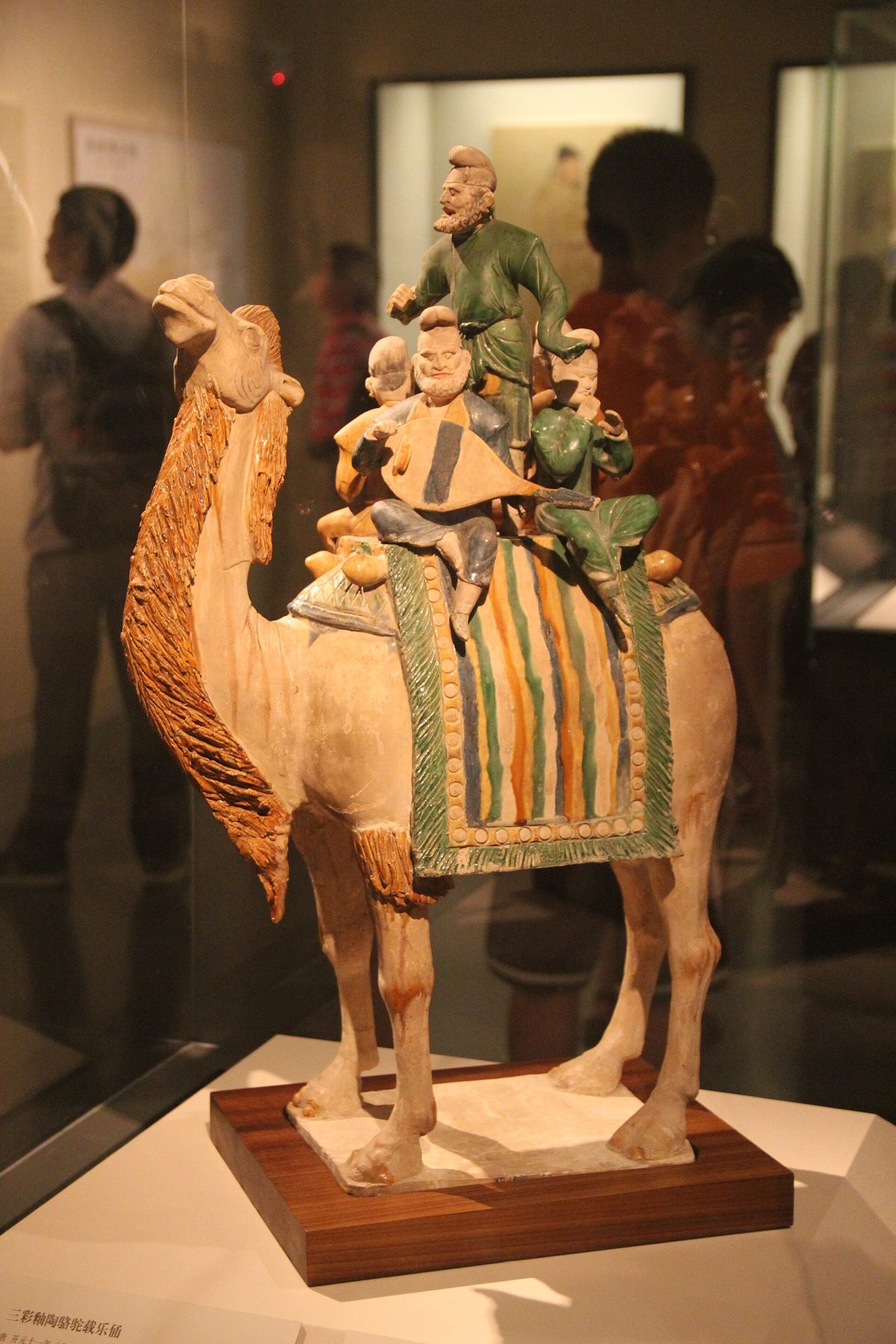
載樂駱駝俑 Camel with musicians
Sancai glazed tomb figure
Sancai glazed earthenware, Tang dynasty, 8th century. A Bactrian camel carrying a troupe of musicians whose pointed caps indicate Sogdian performers.
Camel with musicians · Smithsonian image source · CC0
Elemental Count the figures. Faces, beards, hats, instruments. Intermediate Why put this in a tomb? What does it say about the dead? Advanced Openness, appetite, or empire? Can the object tell them apart?
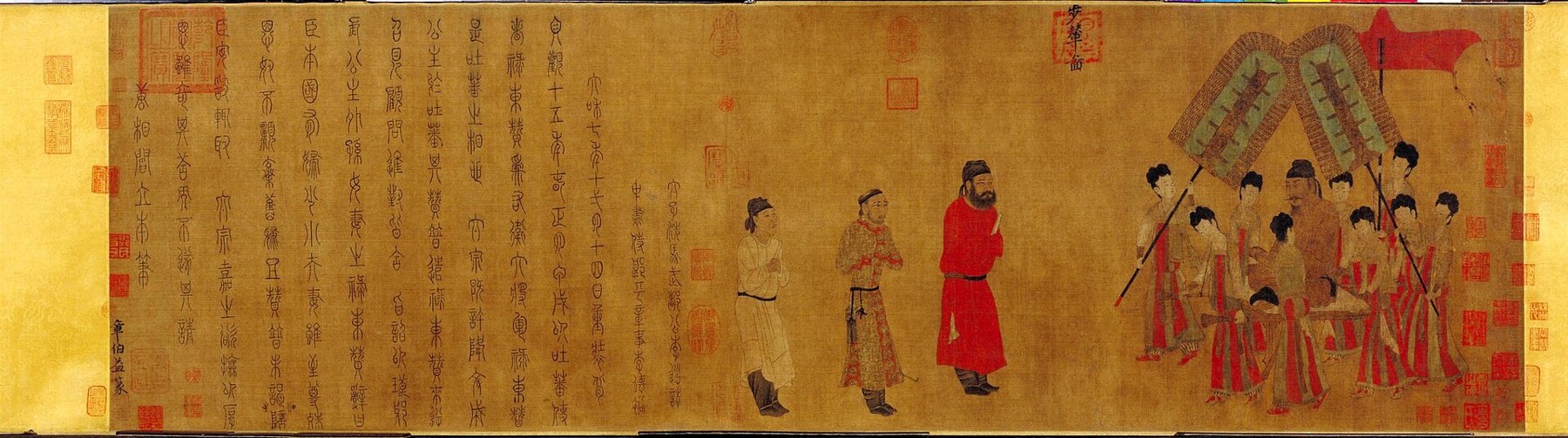
Attributed to Yan Liben
Handscroll, ink and colour on silk. Attributed to Yan Liben (c. 600–673); the surviving scroll is generally taken to be a later Song copy. Palace Museum, Beijing.
Bunian tu · Wikipedia image source · Public domain
Elemental Who is seated, who stands, and how do you know the rank? Intermediate The emperor is borne by women with fans and screens. What is that doing? Advanced Your house has one audience with the throne. What does this scene say about how to use it?
Tuesday, October 27 Song: cities, gender, Zhu Xi
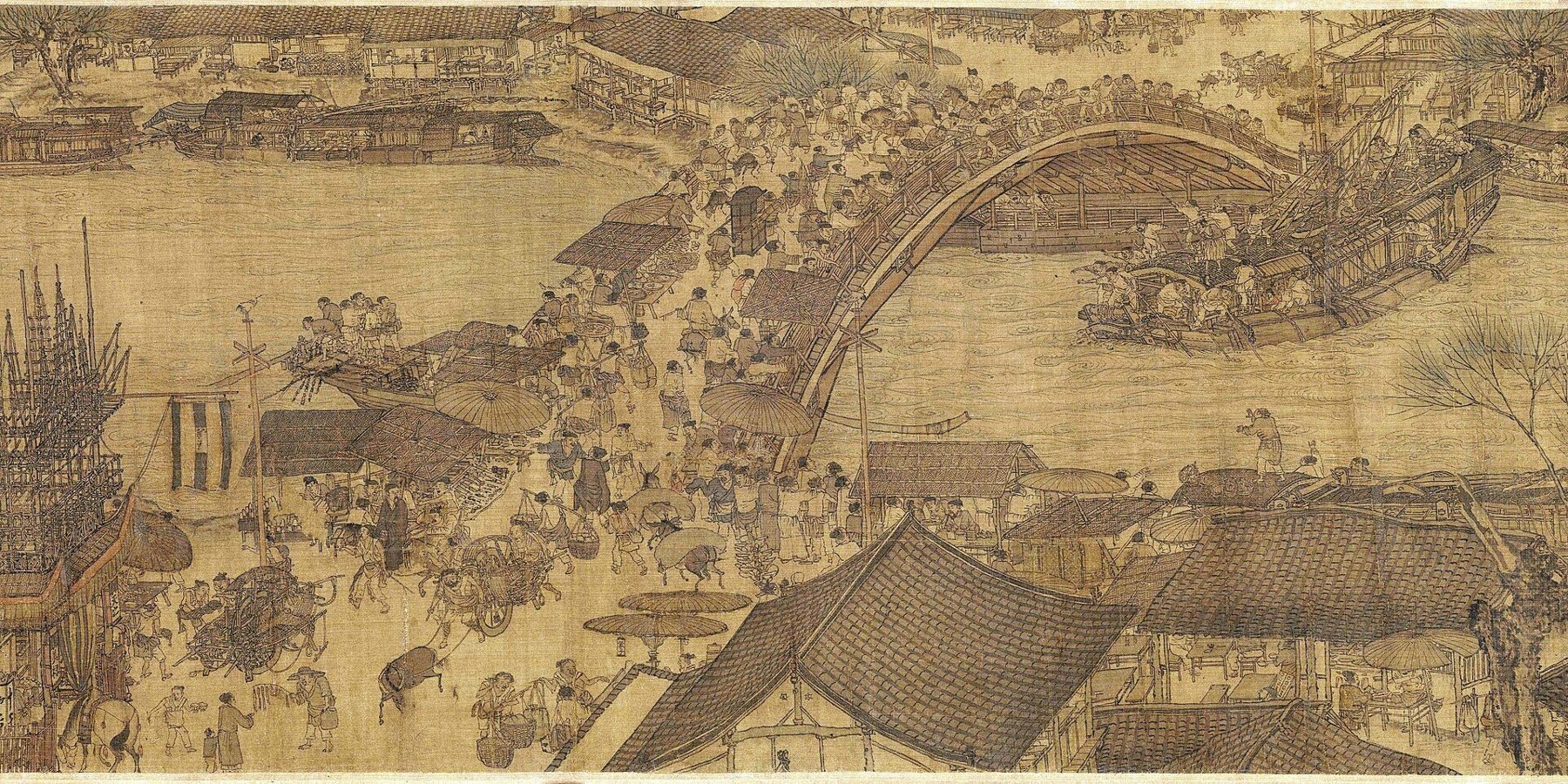
清明上河圖 Along the River During the Qingming Festival
Zhang Zeduan · detail of the original scroll
Handscroll, ink and colour on silk, Northern Song, early 12th century. 25.5 × 525 cm. Palace Museum, Beijing.
Qingming shanghe tu · Wikipedia image source · Public domain
Elemental Pick one square inch. Who is there and what do they do for a living? Intermediate No frame, no vanishing point. How does a handscroll make you read a city? Advanced Zhu Xi wants granaries and family ritual. Is he describing this society or arguing with it?
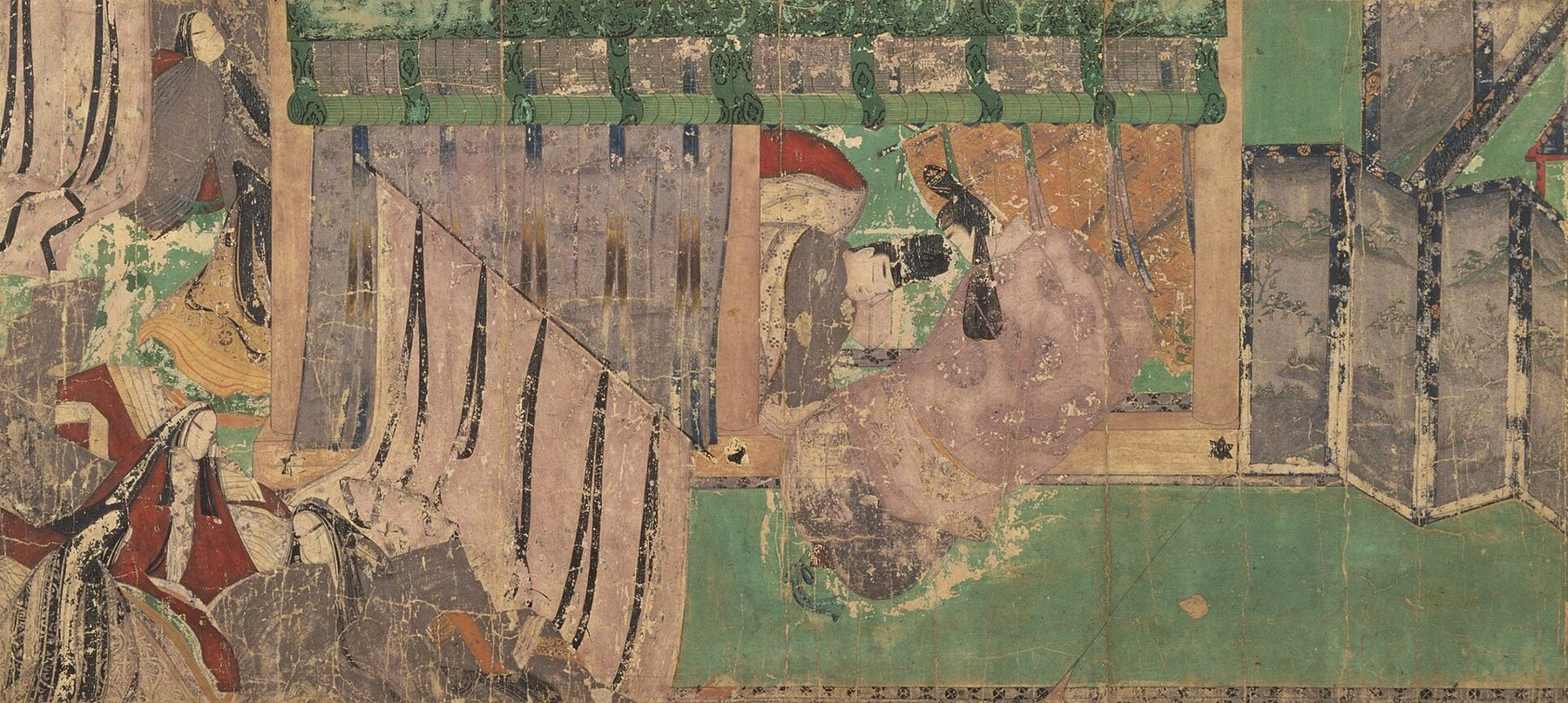
The Kashiwagi scene
Handscroll, ink and colour on paper, 12th century. Japanese National Treasure. Tokugawa Art Museum, Nagoya, and Gotoh Museum, Tokyo.
Genji Monogatari Emaki · Wikipedia image source · Public domain
Elemental Where are you standing? What was removed so you could see in? Intermediate If every face is the same, how does the painter show feeling? Advanced Does that make the Paulownia Court colder, or sharper?
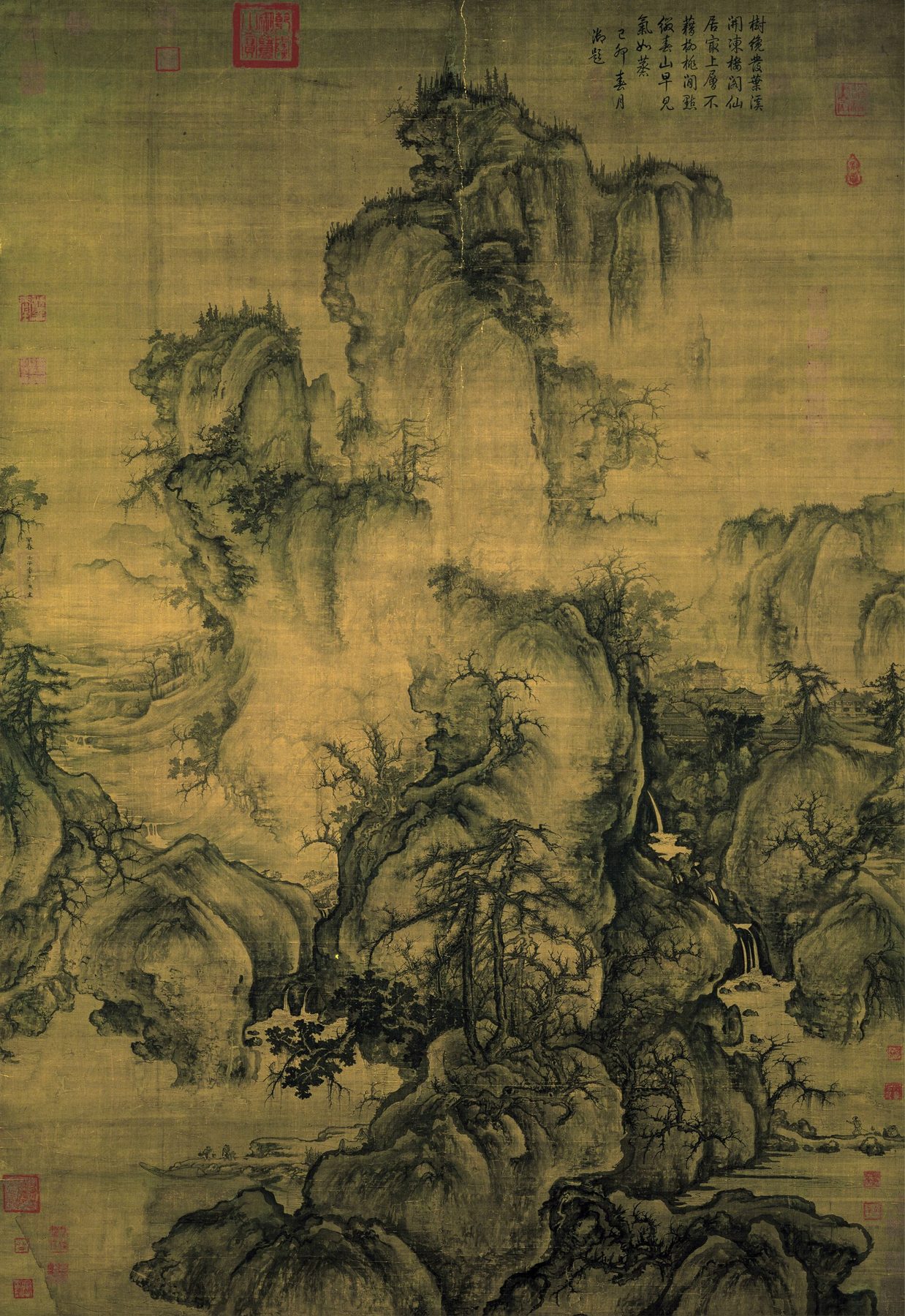
Guo Xi
Hanging scroll, ink and light colour on silk, dated 1072. 158.3 × 108.1 cm. National Palace Museum, Taipei.
Early Spring · Wikipedia image source · Public domain
Elemental Trace a path from the bottom edge to the top. Where does it break? Intermediate Find the three distances. What does each let you see? Advanced Does your project have a centre, or is it a list?
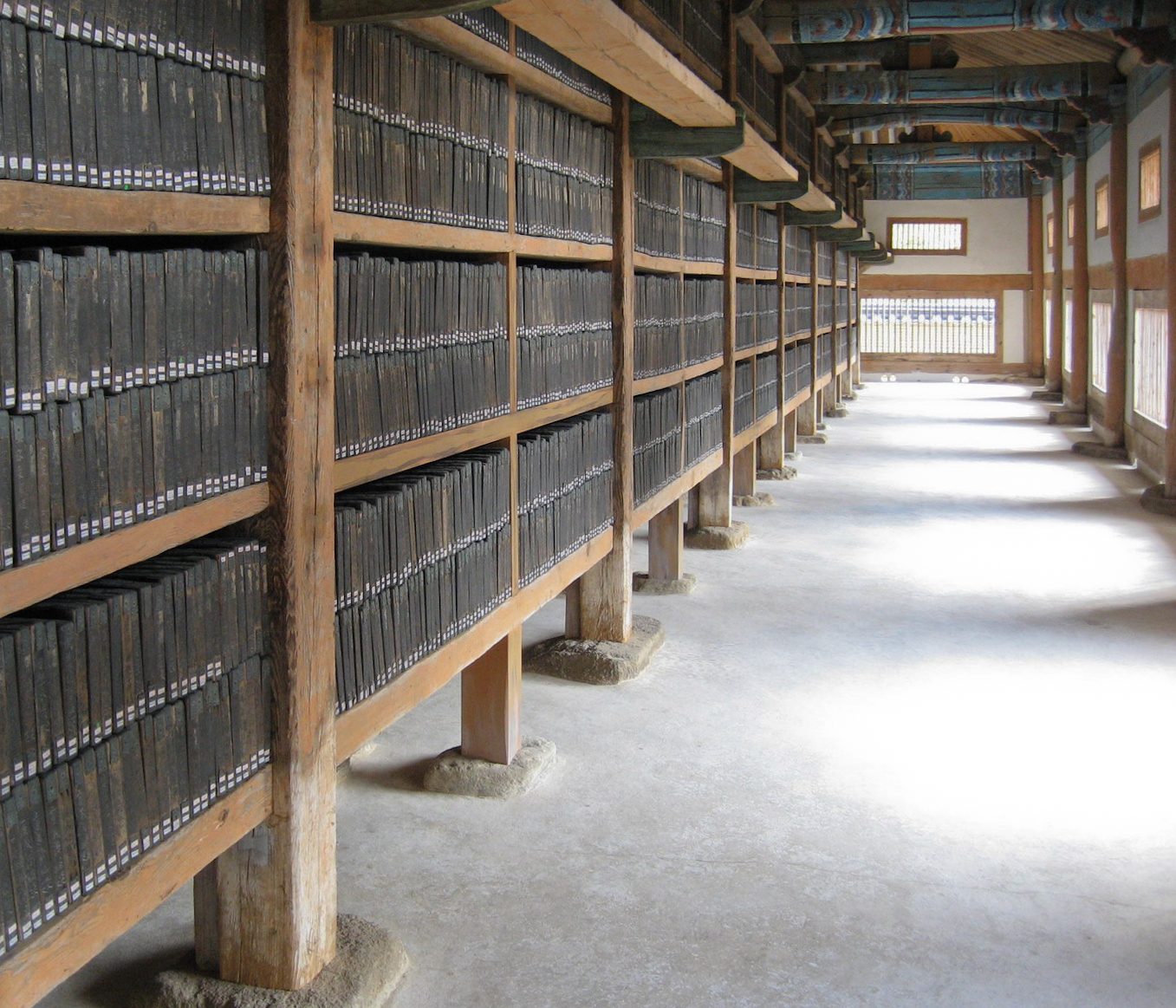
81,258 printing woodblocks
Carved 1237–1248 during the Mongol invasions, replacing a set burned in 1232. Haeinsa, South Gyeongsang. UNESCO Memory of the World.
Tripitaka Koreana · Wikipedia image source · CC BY 2.0
Elemental What are you looking at, and how is it stored? Intermediate Estimate the labour. Who feeds those people during an invasion? Advanced Religious act, military act, or a claim about who Goryeo is?
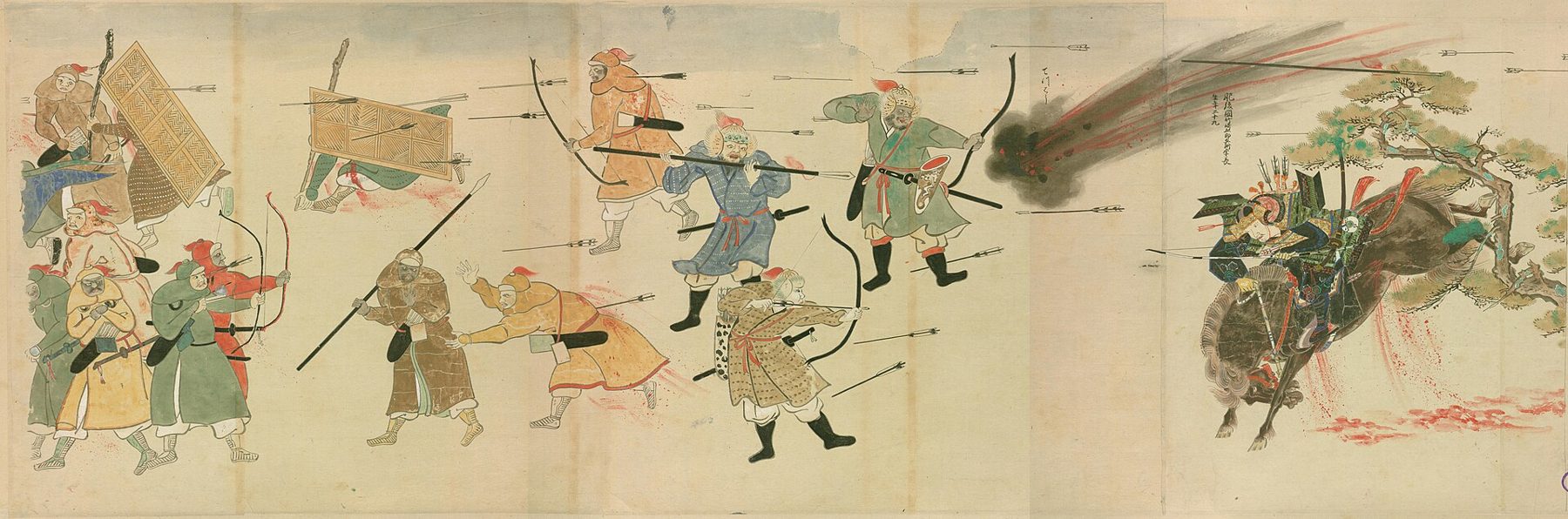
Commissioned by Takezaki Suenaga
Handscroll, ink and colour on paper, c. 1293. Records Suenaga's service in the invasions of 1274 and 1281. Museum of the Imperial Collections, Tokyo.
Mōko Shūrai Ekotoba · Wikipedia image source · Public domain
Elemental What happens in the scene, and where is Suenaga? Intermediate He paid for it. Which details would he insist on? Advanced Code or claim: which one actually held Kamakura together?
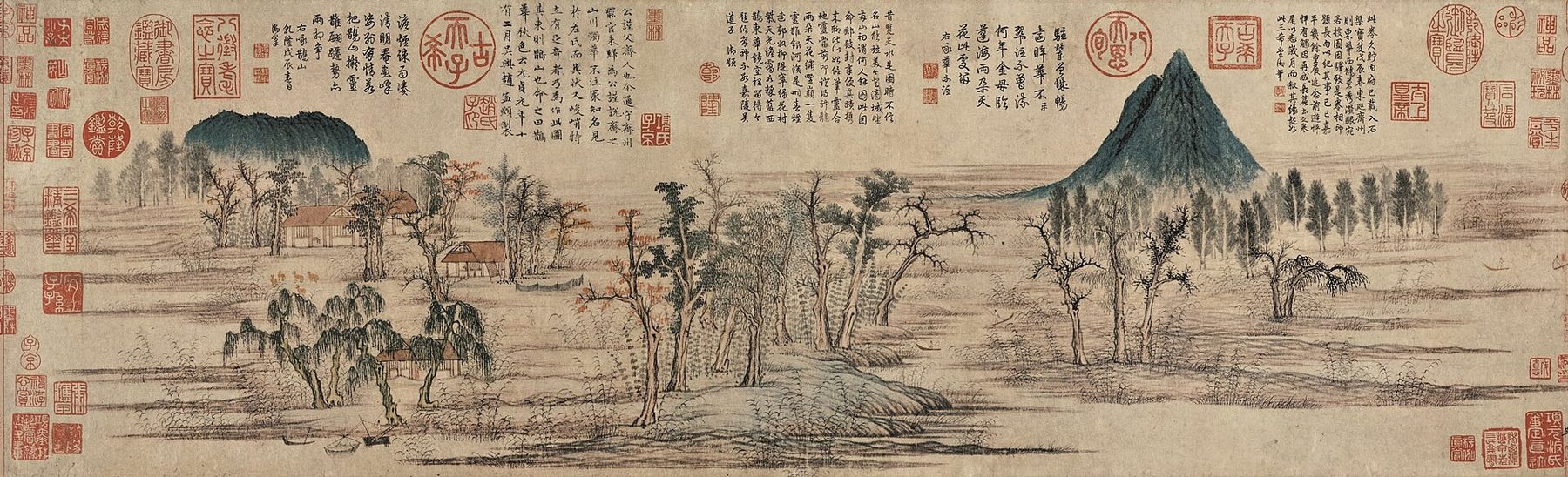
Zhao Mengfu
Handscroll, ink and colour on paper, dated 1295. 28.4 × 93.2 cm. Painted for Zhou Mi. National Palace Museum, Taipei.
Smarthistory image source · Public domain
Elemental Find the two mountains. How does the brushwork differ? Intermediate Painted from memory for someone who cannot go. What accuracy is it after? Advanced Can a landscape be an apology? What would you need to know?
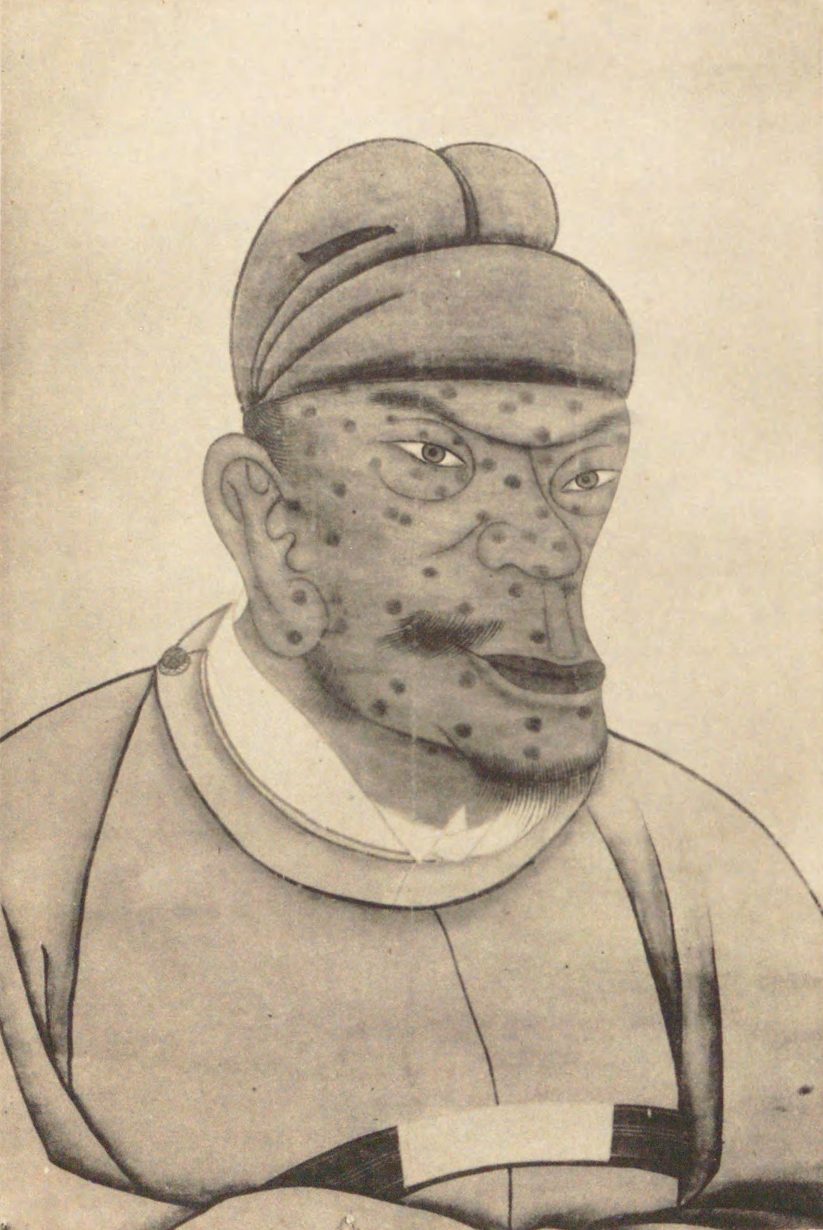
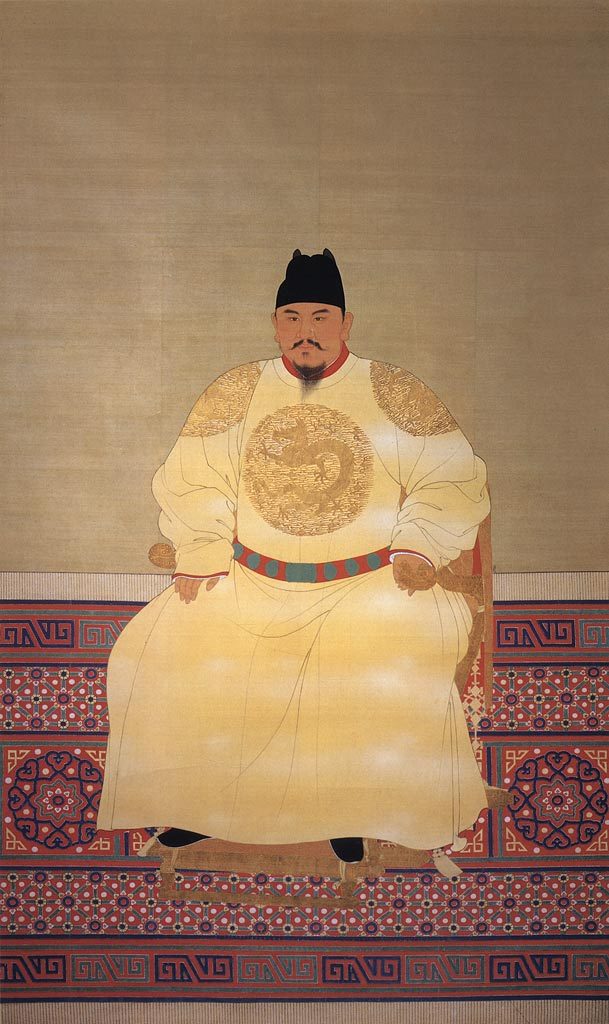
The same founder, painted twice
Left: the irregular or 'unofficial' type, long-jawed and pocked. Right: the formal court portrait. Hanging scrolls, Ming dynasty and later.
Hongwu Emperor · Wikipedia image 1 · image 2 · Public domain
Elemental List the differences. Face, body, clothing, setting. Intermediate Who made each, for whom, to hang where? Advanced A peasant who became emperor is a problem. Does either portrait solve it?
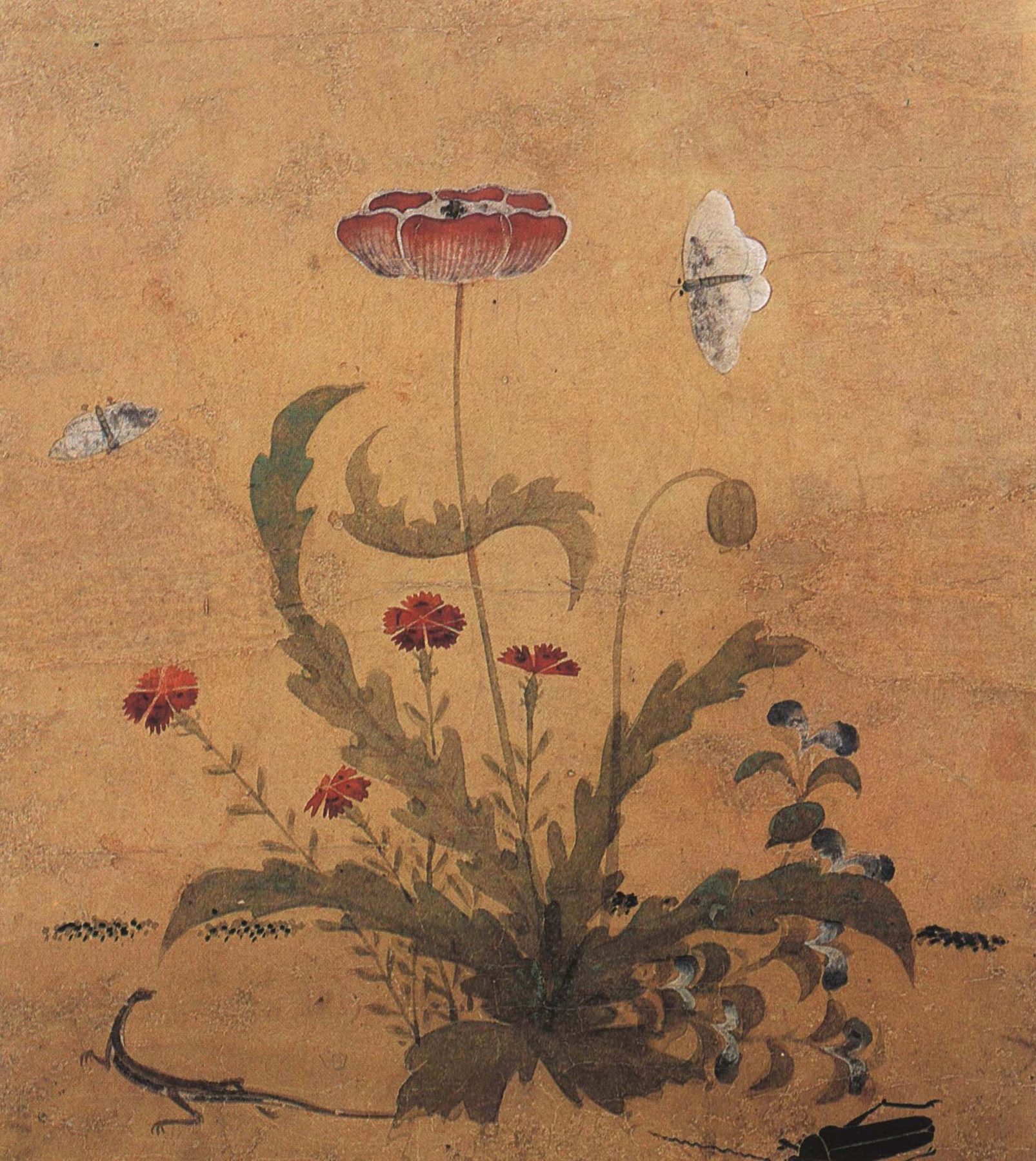
Attributed to Sin Saimdang (1504–1551)
Ink and colour on paper, first half of the 16th century. Poppy and lizard. Attribution traditional. Korea.
Sin Saimdang, paintings · Wikipedia image source · CC BY 4.0
Elemental What is growing, and what is crawling on it? Count the species. Intermediate A poppy and a lizard, at this scale. What is the subject? Advanced What separates the painter from the figure on the banknote?